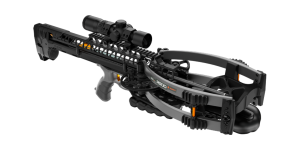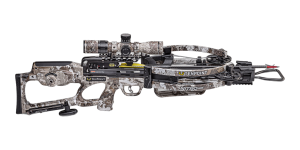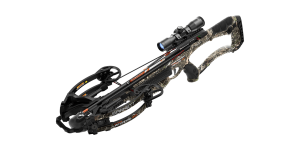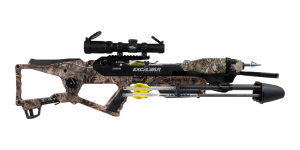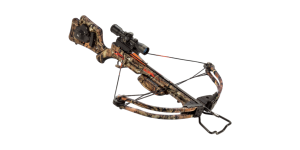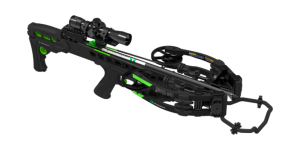
A TenPoint crossbow sling is not one fit, and neither is any other brand name people search. Crossbow mounting hardware changes between models, and it changes between production years inside a single model line. Before you order, you need to know what your own bow has on it, because the box will not tell you and a chart on a website can be out of date.
So this is an inspection procedure, not a fitment chart. Look at your bow, read the manual for your exact model, then match hardware to what you found. That order saves returns, and it stops you drilling a stud into a shell never built to carry load.
Why crossbow fitment is less predictable than rifle fitment
Rifle sling mounting has settled down. Between quick detach sockets, slotted handguards and sling studs, a shooter can name the attachment options on almost any modern rifle in seconds. Crossbows never converged like that.
Part of it is geometry. A forward draw bow and a reverse draw bow put the riser, limbs and string in different places relative to the stock, so the space where a strap could safely sit moves too. A recurve layout changes it again. Part of it is materials: stocks and forends are often molded shells, with strong areas and hollow areas that look identical from outside.
The rest is model churn. Manufacturers revise frames and accessory hardware year to year while keeping a familiar name on the bow, so two bows with the same label bought four seasons apart can be built differently.
Anything you have not seen on your own bow, or read in the manual printed for your own model and year, is a guess. Treat it as one.
Inspect your own bow before you shop
Ten minutes, with the manual open in front of you, settles the question completely.
De-cock the crossbow with a de-cocking device if yours has one, or discharge it into a suitable target, before any handling, sling fitting or maintenance. Never dry-fire a crossbow. Keep your fingers and thumb below the rail and completely out of the string path the entire time you are working on it.
- De-cock or discharge first
A cocked crossbow is a loaded, spring-tensioned tool. Nothing below is worth doing while it is under tension. De-cock or send a bolt into a target, then confirm the bow is uncocked before your hands go near the rail.
- Find the exact model and year
Serial or model plate, usually on the stock or under the frame. Then find the manual for that number, not the current one on the website, which may describe a later revision of the same name.
- Read the manual’s accessory section
The only authoritative source for your bow. If it lists mounting hardware, threaded inserts or approved brackets, that is your answer. If it says nothing, that silence is information too.
- Work the three zones
Rear of the stock, the forend and rail housing, and the base of the riser. In each, look for the same three things: an existing loop or fitting, an accessory rail, or nothing. Watch for blanking caps that cover a fitting, do not assume a hole is a mounting hole, and note the clearance to the moving parts. Photograph and measure anything you find, because hardware that is close but not right is the most common return.
- Sort yourself into one of three buckets
The bow has usable points already, it can accept an approved add-on point, or it has neither and you carry it another way. All three have good answers. Guessing does not.
What brand names tell you when you shop a TenPoint crossbow sling
People search by brand because the brand is the only word they have for the bow they own. That is reasonable, but it is not a fitment standard. A TenPoint crossbow sling, a Ravin crossbow sling and a Barnett crossbow sling are the same class of product. The strap is rarely the limiting factor; the mounting hardware is. Use the table as a prompt list, not as data about your bow.
| Brand you searched | What the name alone tells you | What to confirm on your bow |
|---|---|---|
| TenPoint | A wide lineup covering several frame designs and many model years. | Model and year off the plate, then the hardware listed in that model’s own manual. Do not carry an answer over from another model. |
| Ravin | Bows in this range are commonly reverse draw, which moves the riser and cables relative to the stock. | If yours is a reverse draw layout, check forward-end clearance before choosing any front attachment. |
| Barnett | A long-running name spanning many frames and price points. | Which generation you own. Bows sharing a family name can carry different forend and stock hardware. |
| Killer Instinct | Often sold as a packaged kit, so what is in the box varies. | Whether anything mounting-related shipped in your package, and whether the manual approves adding a point. |
| Wicked Ridge | Often cross-shopped against TenPoint, which does not mean the hardware matches. | Your own model’s manual. Cross-shopping similarity is a marketing fact, not a mechanical one. |
| Excalibur | If yours is a recurve rather than a compound, the front-end geometry differs from most bows here. | Where the limbs sit through the full draw cycle, and how much forward area is genuinely clear of them. |
| CenterPoint | A value range where frames and forends have changed across revisions. | The revision you own, and whether the shell in your chosen spot is solid or hollow before anything is threaded into it. |
Scroll the table sideways to see every column.
The same logic applies to a Killer Instinct crossbow sling, a Wicked Ridge crossbow sling, an Excalibur crossbow sling or a CenterPoint crossbow sling. Each is a strap problem plus a hardware problem, and only your bow answers the hardware half.
When there is no usable attachment point
A normal outcome, not a dead end. Three honest options.
An approved add-on point. Some manufacturers sell or approve a bracket, adapter or stud kit for specific models. Approved is the operative word: someone who knows what sits behind that panel signed off on load going through it.
A non-drilling route. Webbing loops wrapped around an existing structural feature attach without modifying anything, though you have to be certain the loop cannot creep into a moving part.
Carry it a different way. A pack carry is often the better answer on a long approach, and for climbing a stand it is the right one regardless of what your sling can do. Our notes on tree stand crossbow carry cover the haul line method.
A screw driven into an unsupported section of a molded shell can strip out under load, damage the bow and void your warranty. If the manual does not authorize a mounting point in that spot, contact the manufacturer before you make a hole.
Where a sling must never route
This matters more than which strap you buy. Whatever points you end up with, the webbing has to stay out of every moving system on the bow.
Keep the sling clear of the string path and cable sweep, because anything sitting where they travel gets hit at full speed. Keep it out of the rail groove, where the bolt sits and the string rides. Keep it off the trigger box and safety, since a strap that can press a control can fire the bow, and off the anti-dry-fire device, which is a safety mechanism and not a tie-down. Check it against the cocking device path, crank rope included, because a strap that is clear at rest can foul mid-cock.
Cock the bow once with the sling fitted and no bolt loaded, watching the whole cycle. If anything touches, re-route it. Never dry-fire the bow to test this, and follow the de-cocking sequence in your manual.
Matching hardware to what you found
Once you know what is on your bow, this part is quick.
Quick detach sockets and swivels are fast on and off, and the tidiest option when your bow has an approved socket or an adapter for one. The release button can be pressed by a pack strap or a stand rail, so orient it away from anything that will push it. Our quick detach sling mounts cover the common formats. Loops and pass-throughs have no moving parts and no threads to work loose, but are slower to remove and need a feature that holds them rather than letting them slide.
Studs and stud swivels are familiar from hunting stocks. Load concentrates in a small screw, so inspect the screw and the swivel loop each season and after hard use. Add it to your crossbow maintenance routine.
The strap should be the boring part of the decision. The McLean Dynamic Retention Sling uses maritime grade webbing and all metal hardware, comes in Black, Coyote Brown, MultiCam and Ranger Green, and has a patented two-point-to-one-point conversion so you can drop from a stable carry to a single point without unclipping anything. Designed by a founder from the Active Duty SOF community, it averages 4.92 across 169 reviews, and it is the same physical strap we sell for rifle and shotgun use. Which mounts it needs is still a question only your bow can answer.
Do not trust a spec list, including ours
We deliberately do not publish a per-model crossbow fitment chart, and you should be skeptical of anyone who does. Charts go stale the moment a manufacturer revises a frame, and a wrong row does real damage: someone orders hardware for a point their bow does not have, drills to make it fit, and ends up with a damaged stock.
Three sources are worth believing: your own eyes on your own bow, the manual printed for your model and year, and the manufacturer’s customer service with your serial number in hand. Everything else, this page included, is a prompt to go check. Our crossbow sling guide and our overview of choosing a sling for crossbow use work from the same principle.
Frequently asked questions
Will a TenPoint crossbow sling fit another brand of bow?
The strap almost certainly will, because slings are not brand specific. What may not carry over is the hardware at each end. Treat the strap and the mounts as two separate purchases.
My bow has no sling mounts at all. Am I out of options?
No. Ask the manufacturer whether an approved bracket or stud kit exists, look at non-drilling webbing loops, or switch to a pack carry. What you should not do is drill into a molded shell on a guess.
Will the hardware from my rifle sling transfer over?
In most cases the strap transfers fine. The differences are balance and routing. A crossbow is front-heavy and wide, so watch how it hangs and check the webbing stays clear of the string, cables, rail and trigger through a full cocking cycle.
Does the bow need to be de-cocked to fit a sling?
Yes. De-cock with a de-cocking device or discharge into a target before any handling, fitting or maintenance. Never dry-fire the bow to unload it, and keep your fingers and thumb below the rail throughout.
What should I sort out before the sling arrives?
Confirm your mounting points and order the hardware at the same time. Our notes on crossbow bolt length and weight and crossbow bolts vs arrows cover the ammunition side, and how to sight in a crossbow covers what comes after.