

Patented two-point-to-one-point conversion · Made in USA · Lifetime warranty
Start with a two-point sling for everyday rifle carry. Compare a convertible sling if you want its additional configuration options and those features justify the extra hardware or complexity for you. Neither label establishes comfort or compatibility on its own.
Published by McLean Corp USA. Updated September 6, 2026. We manufacture the Dynamic Retention Sling. This guide explains product choices and published specifications; it is not an independent comparative field test.
| Style | What you are buying | Main tradeoff |
|---|---|---|
| Conventional two-point | A strap designed around two attachment locations | Simple carry choice; compare padding and adjustment. |
| Convertible two-to-one-point | One sling with multiple supported configurations | More options, with design and connector details to check. |
| Dedicated single-point | A design using one firearm attachment location | Less support from separate attachment locations during carry. |
Swipe to compare all columns.
Choose the carry features you will use
If your goal is comfortable transport between stops, a well-fitting two-point sling is a useful baseline. If a convertible design has a feature you expect to use, compare the exact mechanism and hardware package. Extra features have value when they solve your problem; they are not a substitute for a strap that fits.
Separate three different buying decisions
Configuration
Conventional two-point and convertible describe the supported connection arrangements. These terms do not specify padding, webbing width or included swivels.
Comfort
Padding, shoulder contact and adjustment range matter independently of configuration. Consider your outer layers and pack straps. If a broad padded section is your priority, make that a requirement before comparing brands.
Attachment hardware
QD describes a removable connection. It does not mean the sling is convertible, and a convertible sling does not necessarily include push-button swivels. Our QD hardware guide explains the separate parts.
How the three common choices differ
The conventional Vickers Sling, Magpul MS4 Dual QD Gen 2 and McLean DRS illustrate different product choices. Compare their published configuration and included hardware in our McLean, Vickers and MS4 comparison. That guide identifies the specific versions so similarly named variants do not get mixed together.
For a broader shortlist, see seven AR-15 slings compared. McLean manufactures the DRS; our comparisons are intended to make the buying differences clear, not to present a manufacturer’s preference as an independent test result.
Find your model before choosing hardware
Start with the guide for your model, then check your exact version and any replacement stock or accessories. A model guide identifies what to verify; it does not guarantee that every configuration uses the same mounts.
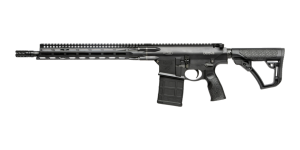
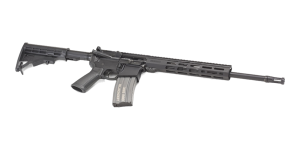
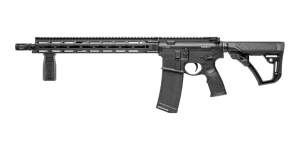
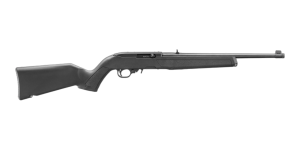
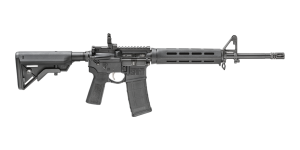
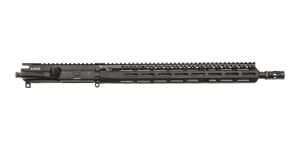
Search all model fitment guides →
Frequently asked questions
What is the difference between a two-point and a convertible sling?
A conventional two-point sling is designed around two attachment locations. A convertible sling offers more than one configuration. Compare the exact product design, fit and hardware rather than assuming convertible means better.
Is a two-point sling a good starting point for an AR-15?
Yes, it is a practical starting point for ordinary carry because it supports the rifle at two locations. Comfort and compatibility still depend on the strap, adjustment range and mounting provisions.
Does a convertible sling include QD swivels?
Not necessarily. Configuration and included hardware are separate specifications. Check the exact package contents before ordering.
Which style should I buy if comfort is my main concern?
Compare shoulder contact, padding, usable adjustment range and fit with your clothing or pack. Configuration alone does not establish which sling will feel more comfortable.
Make your next choice
Patented two-point-to-one-point conversion · Made in USA · Lifetime warranty
