

Patented two-point-to-one-point conversion · Made in USA · Lifetime warranty
Choose shotgun sling swivels by the attachment points on your exact shotgun. A traditional sling stud, a push-button QD socket and a fixed loop accept different connectors. The right starting point is the interface you have, followed by the strap and hardware package you want.
Published by McLean Corp USA. Updated September 6, 2026. We manufacture the DRS. This guide explains buying and compatibility considerations; it does not report an independent comparative field test.
| Your existing interface | What to compare | Before buying |
|---|---|---|
| Sling stud | A compatible stud swivel | Do not substitute a push-button QD swivel. |
| Push-button QD socket | A compatible QD swivel | Confirm socket compatibility and connector quantity. |
| Fixed loop or eyelet | Approved compatible webbing or hook | Check opening size, clearance and product instructions. |
| No approved sling point | Manufacturer-supported attachment options | Resolve compatibility before purchasing a mount. |
Swipe to compare all columns.
Check both attachment provisions
Do not assume the stock and the front attachment use the same interface. A factory version may differ from another version in the same model family, and replacement parts can change the picture again. The correct shopping list starts with identifying each approved connection.
Use the fitment library and compare the guide with your actual shotgun. Include the exact variant and any replacement stock or other relevant parts when asking about compatibility.
Read “quick detach” carefully
The phrase describes a removable connection, not a universal shape. A removable stud swivel and a push-button QD swivel are not the same interface. Product photographs and specifications should make the receiving connection clear.
A socket or mount can be sold separately from the swivel that attaches to it. Check the contents of the exact listing and the number of connectors supplied. Our quick-detach hardware guide explains that distinction.
Buying a sling and swivels together
Compare the strap’s attachment ends with the selected swivels. Reuse existing compatible hardware when appropriate rather than assuming every new strap requires a full set of new mounts. If you need additional parts, compare the live mounts and hardware options after the interface is confirmed.
The McLean shotgun and rifle listings sell the same physical DRS strap. Neither label establishes universal shotgun fit. The package guide explains the difference between selecting a color and adding hardware.
Choose the strap for comfort too
Compatible hardware answers the connection question; it does not guarantee comfortable carry. Compare padding, usable adjustment range and fit with your normal clothing or pack. Read the shotgun sling comparison for the broader buying decision.
Find your shotgun model
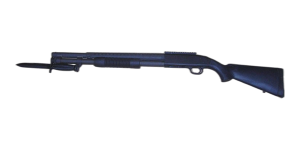 Mossberg 590A1
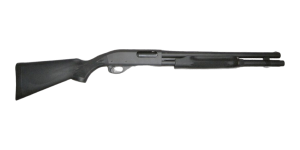 Remington 870 (Tactical/Express)
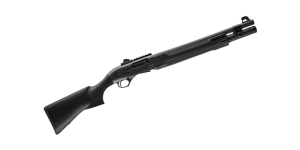 Beretta A300 Ultima Patrol
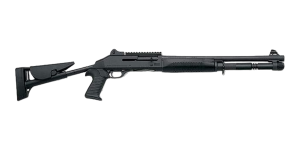 Benelli M4
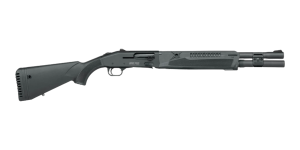 Mossberg 940 Pro Tactical
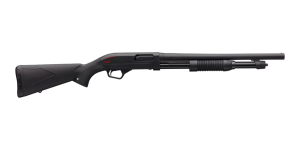 Winchester SXP Defender
Search all model fitment guides →
Frequently asked questions
Is a shotgun sling stud the same as a QD socket?
No. A stud accepts a compatible stud swivel. A push-button QD swivel connects to a compatible socket. Check the actual interface rather than relying on the phrase quick detach.
Will every Remington 870 or Mossberg 500 use the same swivels?
Do not assume that. Factory versions and replacement stocks or other parts can change attachment provisions. Check your exact model and configuration.
What if my shotgun has no sling studs?
It may have another approved interface, or it may require a manufacturer-supported accessory. Identify the existing provisions and confirm supported options before ordering or modifying anything.
Do I need to buy new swivels with a new sling?
Not necessarily. Existing swivels may be reusable if they are compatible with the selected sling and attachment points and remain in suitable condition. Confirm that combination first.
Choose your sling package
Compare McLean sling and hardware choices or ask us about the exact fit before ordering.
Patented two-point-to-one-point conversion · Made in USA · Lifetime warranty
